

Trigger Warning: This post discusses postpartum depression, which may be distressing for some readers. If you or someone you know is struggling with mental health issues, please seek professional help.
Welcome to Chuckles and Cuddles, a space where we embrace the full spectrum of parenthood—the highs, the lows, and the hilarity in between. As a psychiatrist, I want to share a deeply personal and emotional journey that many mothers experience but few openly discuss: postpartum depression. This story is about my own encounter with it, and how, with time and support, I emerged stronger and more resilient.
The Silent Struggle
After the birth of my son, I expected to feel nothing but joy and overwhelming love. Instead, I found myself engulfed in a cloud of sadness and anxiety. The first few weeks were a blur of sleepless nights and relentless crying—not just from my baby, but from me as well. I felt an unshakeable sense of doom, convinced that something terrible was going to happen.
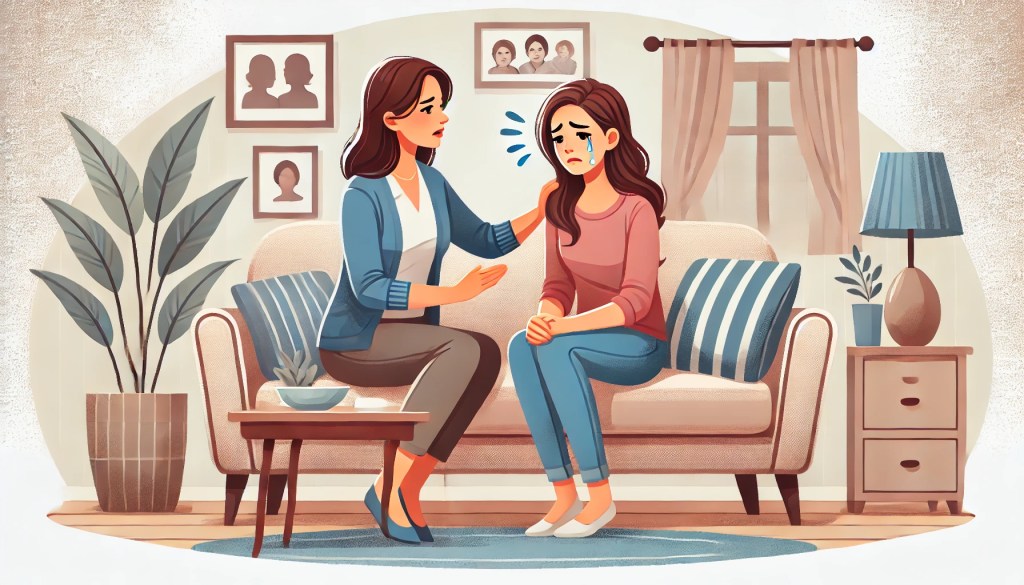
One evening, overwhelmed by these dark thoughts, I talked to my mom. With tears streaming down my face, I confided in her, “If something happens to me, please take care of my son.” Her immediate response was one of concern and support, yet it was clear she was also worried. This was not the joyous new mother she had expected.
A Glimmer of Light
Despite the love and support around me, the feeling of despair lingered. Days turned into weeks, and I found myself sinking deeper into this abyss. It wasn’t just sadness; it was a profound sense of inadequacy and fear. The guilt of not feeling the way I thought I should as a new mother weighed heavily on me.
But as time went on, there were small glimmers of hope. Around the three-month mark, I noticed a subtle shift. The world, which had seemed so gray, started to show hints of color again. I smiled more easily, laughed at the small, silly things, and began to feel like my old self. It was as if the fog was gradually lifting, allowing me to truly connect with my son and appreciate the moments of motherhood.

The Healing Power of Humor
Humor became a crucial part of my healing process. I remember one particularly chaotic morning when my son decided that 3 a.m. was the perfect time to test his vocal cords. After breastfeeding him, Exhausted and at my wits’ end, I stumbled into the kitchen to get some milk for myself, only to find the fridge door wide open and the milk nowhere to be found. Turns out, in my sleep-deprived state, I had put it in the pantry.
Instead of breaking down, I laughed—a deep, belly laugh that felt like a release. That laughter reminded me of the resilience and strength within me. It also reminded me that parenthood, despite its challenges, is filled with moments of absurdity that we can either cry or laugh about. I chose to laugh.
Embracing the Journey
Postpartum depression is a journey that no one should have to walk alone. It’s estimated that about 1 in 7 women experience postpartum depression, and the key to navigating it is acknowledging it and seeking help (American Psychological Association, 2021). For me, it was the support of my family, friends, and eventually a therapist that made all the difference.
To any new mother reading this, know that it’s okay to feel overwhelmed. It’s okay to cry and to ask for help. Your feelings do not define your worth as a mother. Embrace the messiness, the unexpected tears, and the moments of doubt, because they are all part of this incredible journey.
What the Experts Say
According to the Mayo Clinic, postpartum depression can manifest with severe mood swings, excessive crying, difficulty bonding with your baby, and an intense sense of fatigue (Mayo Clinic, 2021). These symptoms often start within the first few weeks after childbirth but can begin earlier or up to a year after delivery.
The National Institute of Mental Health (NIMH) emphasizes the importance of understanding the difference between “baby blues” and postpartum depression. While baby blues are short-lived and generally resolve within two weeks, postpartum depression is more intense and lasts longer, requiring professional intervention (NIMH, 2021).
Seeking Professional Help
One of the most important steps in managing postpartum depression is seeking professional help. Therapy, whether cognitive-behavioral or interpersonal, has been shown to be effective in treating postpartum depression. Sometimes, medication may also be necessary. It’s crucial to talk to a healthcare provider to find the best course of treatment for you.

Dr. Samantha Meltzer-Brody, a renowned expert in perinatal psychiatry, emphasizes the importance of early intervention. “The sooner we identify postpartum depression, the sooner we can provide mothers with the support and treatment they need to recover and thrive,” she says.
Conclusion
My experience with postpartum depression taught me that motherhood is not about perfection but about resilience, love, and finding joy amidst the chaos. If you or someone you know is struggling with postpartum depression, reach out and seek support. You are not alone, and there is a light at the end of the tunnel.
Here at Chuckles and Cuddles, we believe in sharing these real, raw stories to remind every parent that they are seen, heard, and valued. Together, we can navigate the challenges and celebrate the beautiful, messy moments that make parenthood so extraordinary.
References
American Psychological Association. (2021). Postpartum Depression. Available at: APA.
Mayo Clinic. (2021). Postpartum Depression. Available at: Mayo Clinic.
National Institute of Mental Health. (2021). Postpartum Depression Facts. Available at: NIMH.
 Chuckles & Cuddles
Leave a comment