
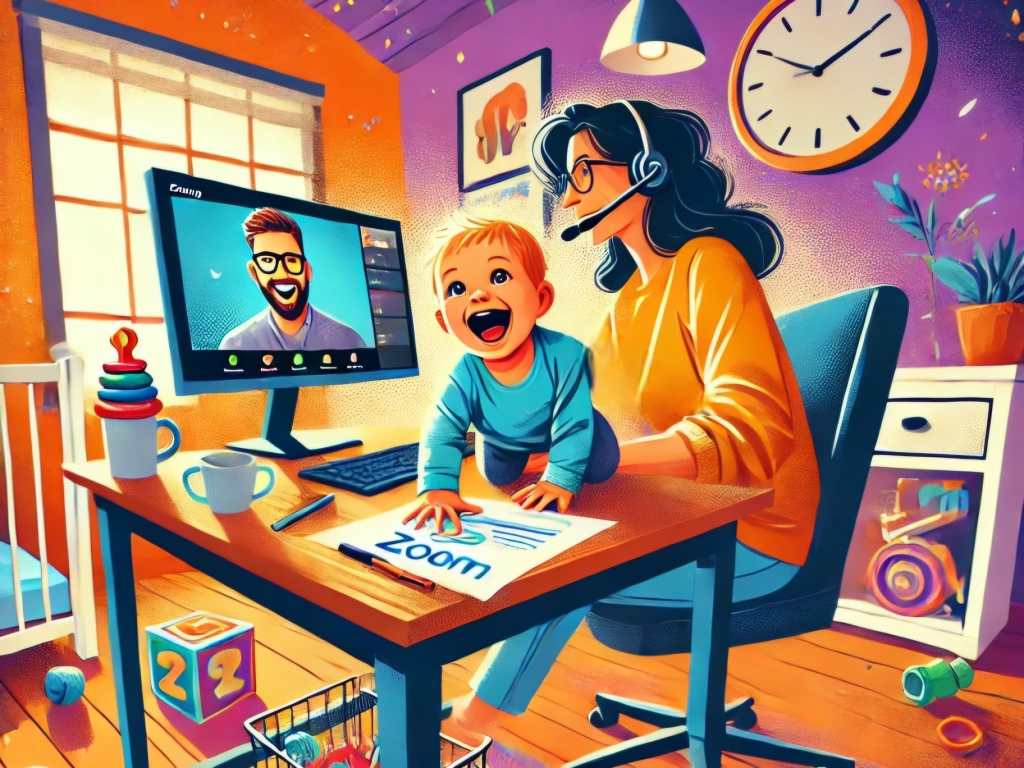
Welcome to Chuckles and Cuddles, where we embrace the delightful chaos of parenting with humor and heart. Today, we’re diving into a scenario many of us have faced in this work-from-home era: the unexpected but inevitable moment when your toddler decides to join your work meeting. Whether it’s an unplanned cameo or a full-on takeover, we’ve all been there. Let’s explore these amusing and sometimes challenging moments, offering tips, empathy, and a good laugh along the way. Welcome to the wild ride of parenting in the digital age!
The Unplanned Appearance
As a psychiatrist and mother, I’ve had numerous experiences balancing these roles, but none quite as memorable as the day my toddler, Khizar, unexpectedly joined one of my virtual meetings. Let’s explore how these moments can teach us resilience and patience, and how to handle them with grace and laughter. Welcome to the wild ride of parenting in the digital age!
As I settled into my home office, ready for another insightful Public Mental Health Leadership course webinar, little did I know that my 14-month-old son, Khizar, had his own plans. With the mic on and the camera rolling, Khizar decided it was the perfect moment to make his grand entrance. With a burst of energy and curiosity, he entered the room, clutching his favorite stuffed animal and sporting a cheeky grin. His giggles echoed through the virtual room, and I found myself juggling between muting the microphone and gently redirecting him. The next thing I knew, he was climbing onto my lap, fascinated by the unfamiliar faces on the screen.

The unexpected interruption was met with chuckles from my colleague, who graciously acknowledged the adorable intrusion. For a moment, the seriousness of our discussion gave way to light-heartedness, reminding us of the human aspect behind our professional personas.
Navigating the Chaos with Humor and Patience
In the moment, it’s easy to feel overwhelmed or embarrassed, especially when your peers or instructors are on the other side of the screen. But these instances are a reminder that life, with all its unpredictability, continues beyond our work and educational pursuits.
Research supports the notion that such interruptions, while potentially stressful, can be managed effectively. According to a study by the American Psychological Association, maintaining a flexible mindset and having a supportive work environment can help reduce stress and improve job satisfaction among working parents. Flexibility allows parents to respond to unforeseen events, like a toddler crashing a meeting, without undue stress.
Here’s how I managed the situation:
Navigating the Chaos with Humor and Patience
In the moment, it’s easy to feel overwhelmed or embarrassed, especially when your peers or instructors are on the other side of the screen. But these instances are a reminder that life, with all its unpredictability, continues beyond our work and educational pursuits. Here’s how I managed the situation:
- Stay Calm and Composed: It’s natural to feel flustered, but keeping a calm demeanor helps. it requires required a blend of quick thinking and flexibility. I calmly excused myself, muted the mic, and redirected Khizar to his toys. This balancing act highlighted the reality of working parents: the constant need to switch roles and adapt to unexpected challenges.
- Embrace the Humor: Sometimes, the best response is a laugh. Acknowledging the situation with humor can ease tension and humanize the experience. After all, we’re all navigating this new normal together.
- Set Clear Boundaries: While it’s important to involve children in our daily lives, setting clear boundaries during work or study time is crucial. I’ve found that explaining to Khizar (even at his young age) when I need quiet time helps him understand and adapt.
- Making the Most of It: Turning Interruptions into Teachable Moments: Instead of seeing these interruptions as setbacks, they can be reframed as teachable moments. For instance, Khizar’s curiosity about my laptop has turned into a daily ritual where we “work” together—he plays with his toy laptop while I attend to mine. This not only keeps him occupied but also fosters a sense of inclusion.
- Inform the meeting: It’s a good practice to add baby name in your meeting name. For me it’s “Dr Shabina and Baby Khizar”. Just put a message in the meeting chat that your toddler has decided to join the meeting. It will help you to relax and at the same time practicing professionalism.
The Benefits of Embracing the Chaos
While the initial disruption might feel overwhelming, there are benefits to embracing these moments. They humanize us, breaking down the often rigid barriers of professional life and allowing for authentic connections. In fact, research suggests that employees who experience and share personal moments, such as family interruptions, often feel more connected and supported in their work environments. This sense of community and understanding can enhance job satisfaction and reduce burnout.
Additionally, seeing a colleague’s child can foster empathy and understanding among coworkers, promoting a more inclusive and supportive workplace culture. It serves as a reminder that everyone is juggling multiple responsibilities and that flexibility and understanding are crucial.
Creating a Supportive Work-From-Home Environment
Research highlights that parents working from home often face unique challenges, such as balancing professional responsibilities with childcare. Parents working from home report higher levels of stress due to the constant juggling of work and family demands. However, these experiences can also foster resilience and adaptability, essential traits in both parenting and professional settings.

Furthermore, studies show that children can benefit from seeing their parents engage in professional activities. It provides them with early exposure to work ethics and the importance of balancing responsibilities, even if it’s just an unplanned Zoom appearance
To better manage such situations, it’s important to establish clear boundaries and communicate with your team. Setting designated work hours and having a dedicated workspace can help delineate professional and personal time. Additionally, discussing the potential for interruptions with colleagues can set realistic expectations and reduce any potential stress.
The National Institute for Occupational Safety and Health (NIOSH) suggests that employers and employees work together to create a supportive environment, which includes understanding the unique challenges faced by working parents. This collaboration can lead to more flexible policies, such as adjustable work hours or the ability to mute video/audio during sensitive meetings.
Conclusion: Finding Humor in the Unpredictable
In the end, managing a toddler while working from home is about finding humor in the chaos and embracing the unpredictability of life. These moments, while challenging, also offer an opportunity to model resilience and adaptability for our children. They remind us that perfection is an illusion and that it’s okay to let our professional and personal lives intersect occasionally.
As parents and professionals, we do our best to navigate these dual roles with grace and patience. So, the next time your toddler crashes a work meeting/video call or webinar, remember to take a deep breath, smile, and perhaps even share the moment with your colleagues. After all, it’s these little interruptions that add a touch of humanity to our professional lives and remind us of the joys and challenges of parenthood.
At Chuckles and Cuddles, we celebrate the unpredictable moments of parenting, from the delightful chaos of work-from-home surprises to the everyday adventures of raising a child. Share your own stories and let’s find humor and camaraderie in the shared experience of parenting in a digital world.
Cheers to all the multitasking parents out there—may your Zoom meetings be as peaceful as possible!
References
- American Psychological Association (APA): Making work your family’s ally.
- American Psychological Association (APA): Public Policy, Work and Families: The Report of the APA Presidential Initiative on Work and Families
- Barnett, R. C., & Hyde, J. S. (2001). Women, men, work, and family: An expansionist theory. American Psychologist, 56(10), 781–796. https://doi.org/10.1037/0003-066X.56.10.781
- National Institute for Occupational Safety and Health (NIOSH): Impact Wellbeing™ Guide: Taking Action to Improve Healthcare Worker Wellbeing.
 Chuckles & Cuddles
Leave a comment